Hartmut Bonk: Imaginäres Theater
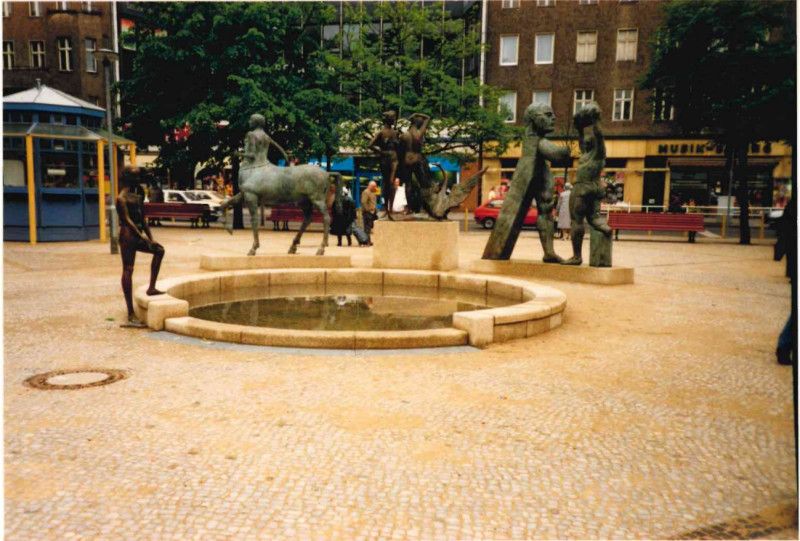
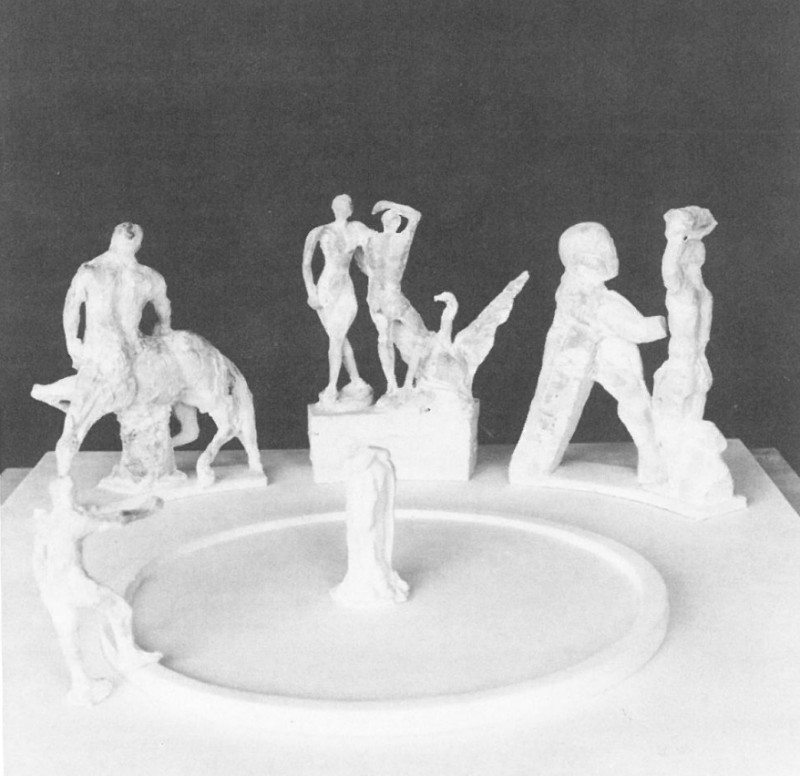
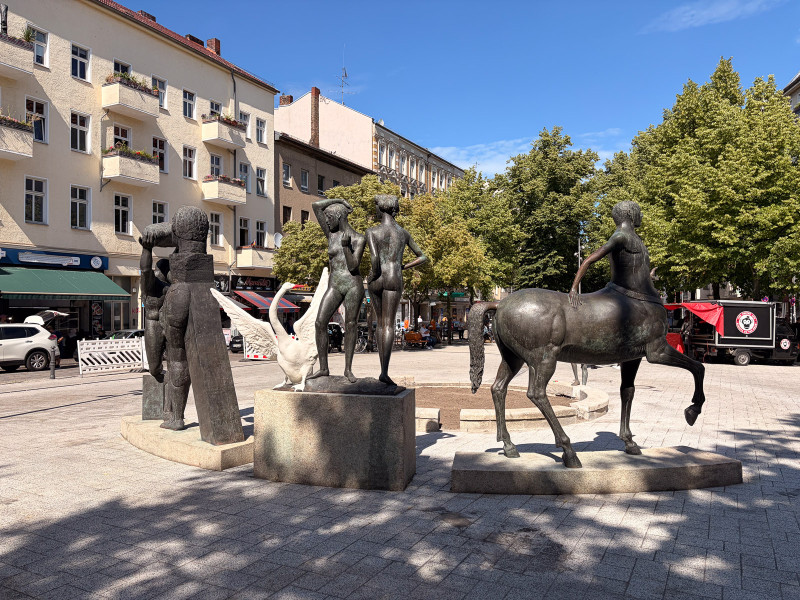
The “Imaginary Theater” fountain on Karl-Marx-Platz consists of a circular granite basin with an Amnesit mosaic floor, in which seven life-size bronze sculptures are arranged as if on a stage. Sculptor Hartmut Bonk created a composition of mythological figures that combines ancient motifs with a contemporary design language: Narcissus as the embodiment of self-reflection and vanity, the centaur as a being between worlds, Venus and Leda with a swan as representatives of love and mythological transformation, and a pair of Titans symbolizing conflict and the tension between nature and civilization.
Development
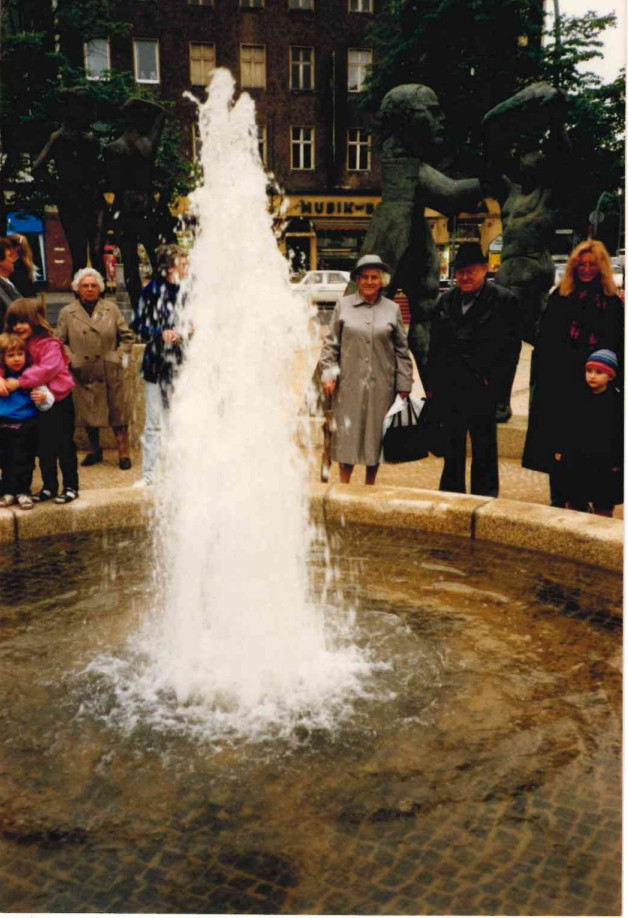
In 1982, the Senator for Construction and Housing announced a design competition for the redesign of Karl-Marx-Platz. After two rounds of the competition — in the first, water was used only as an accent, prompting the jury to call for a second round with greater use of water features — the jury announced its recommendation for Hartmut Bonk’s design on June 27, 1986. The “Imaginary Theater” opened on May 22, 1987.
Imaginary Theater, Figures
The “Imaginary Theater” fountain complex was created in 1986–1987 on Karl-Marx-Platz as the result of a competition for art in public spaces, which was won by the sculptor Hartmut Bonk.
The installation consists of a round granite basin (approx. 5 m in diameter) with an Amnesite mosaic floor, in which four life-size bronze sculptures are staged as if on a stage. Bonk created a mythological composition of figures that combines ancient motifs with a contemporary formal language:
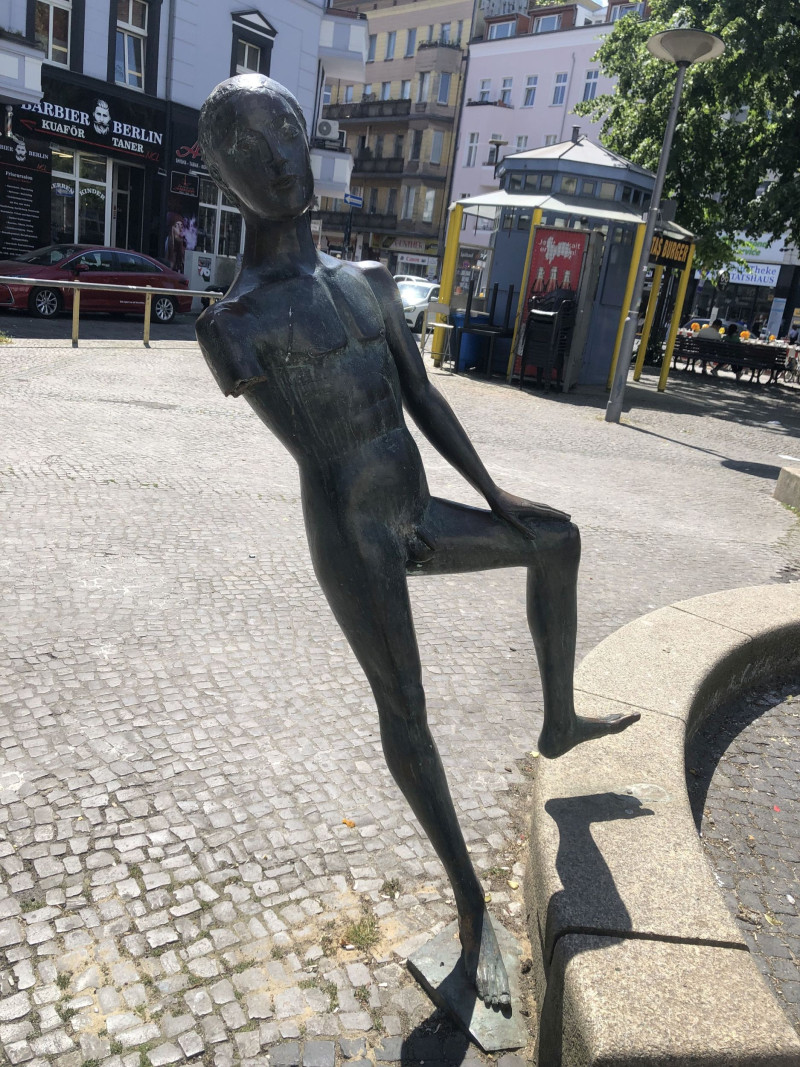
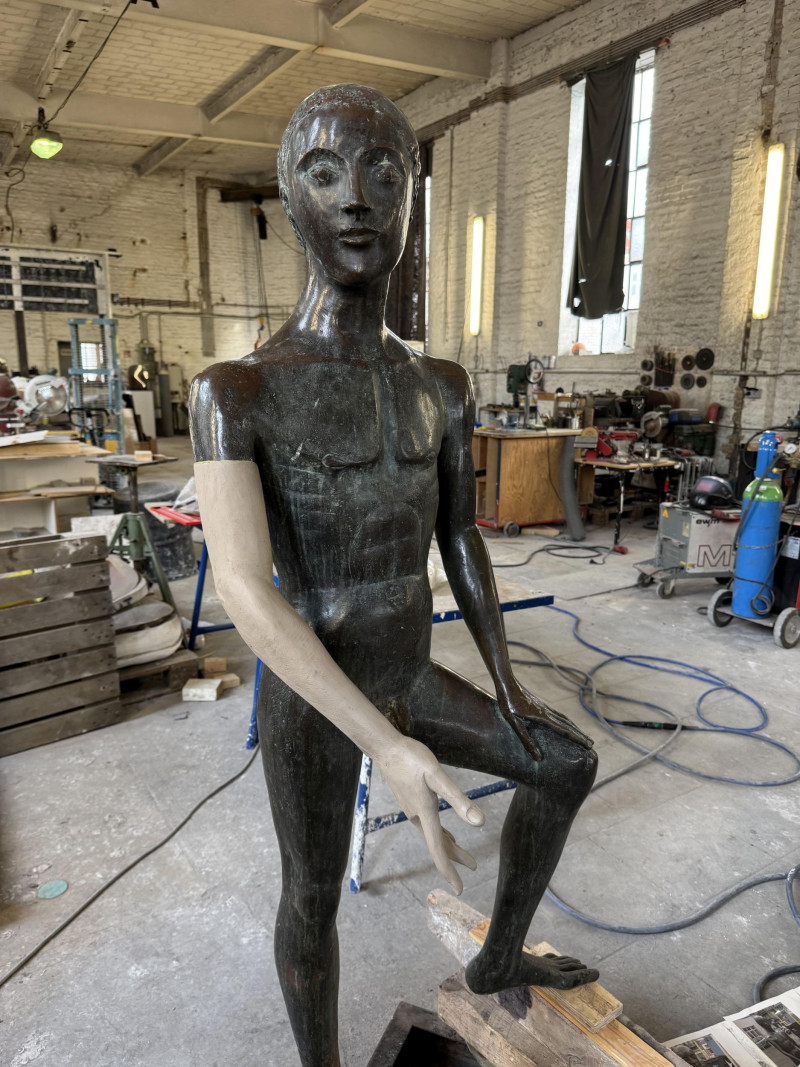
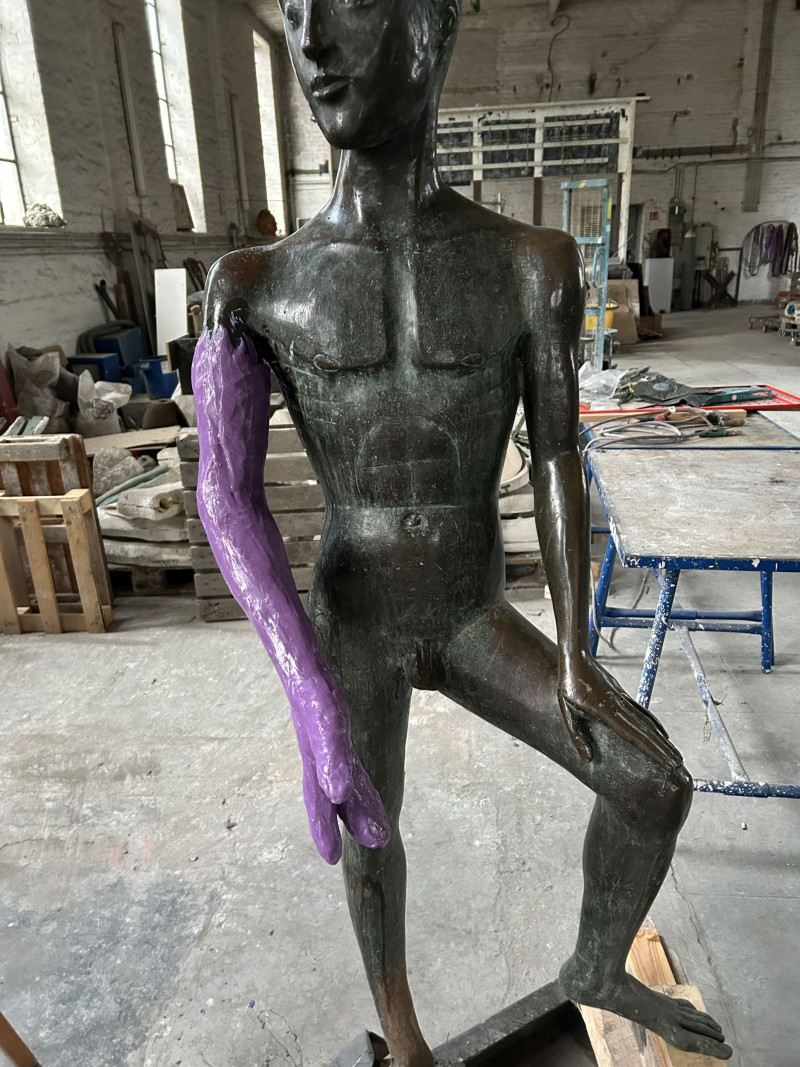
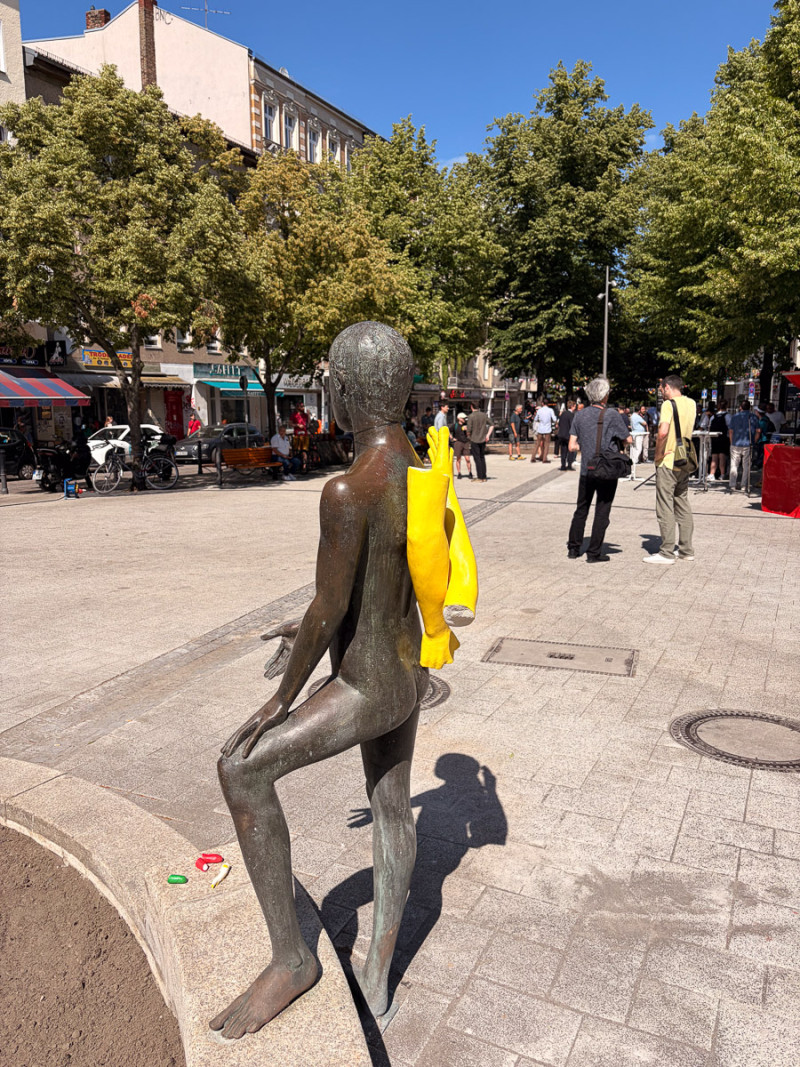
Narcissus: The youth leaning against the edge of the basin embodies the motif of self-reflection and vanity.
Centaur: The human-horse figure represents the wild and grotesque, a being between worlds.
Venus and Leda with Swan: The female duo represents love, eroticism, and mythological transformation.
Titan Couple: Two powerful, fragmented figures symbolize conflict and the tension between nature and civilization.
With this theatrical composition, Bonk created a meeting place between ancient myth and urban space.
Damage and Restoration
In May 2024, the arm of the Narcissus sculpture was severed and removed due to vandalism. Since no model existed for a replica, the Knaak foundry was commissioned to remodel the arm based on old photographs. The reconstruction was completed in December 2025. The entire work is expected to be reinstalled in May 2026 following the completion of renovation work on Karl-Marx-Platz.
Data and Facts
- Location: Karl-Marx-Platz
- Completion: 1987
- Competition type: Closed two-phase competition
- Competition participants, Phase 1: Olaf Metzel, Jean Ipousteguy, Waldemar Otto, and Richard Hess.
- Competition participants, Phase 2: Hartmut Bonk, Waldemar Otto, Richard Hess, Christa and Karlheinz Biederbick, Erich Fritz Reuter, and Ludmilla Seefried-Matejkova.
- Construction cost: 409,050 (800,000 DM)