Geyger/ Szelinsky-Singer / Bogouchewskaia: Geyger-Brunnen
Ernst Moritz Geyger (1915–1918) | Katharina Szelinsky-Singer (1970) | Anna Bogouchewskaia (2001)
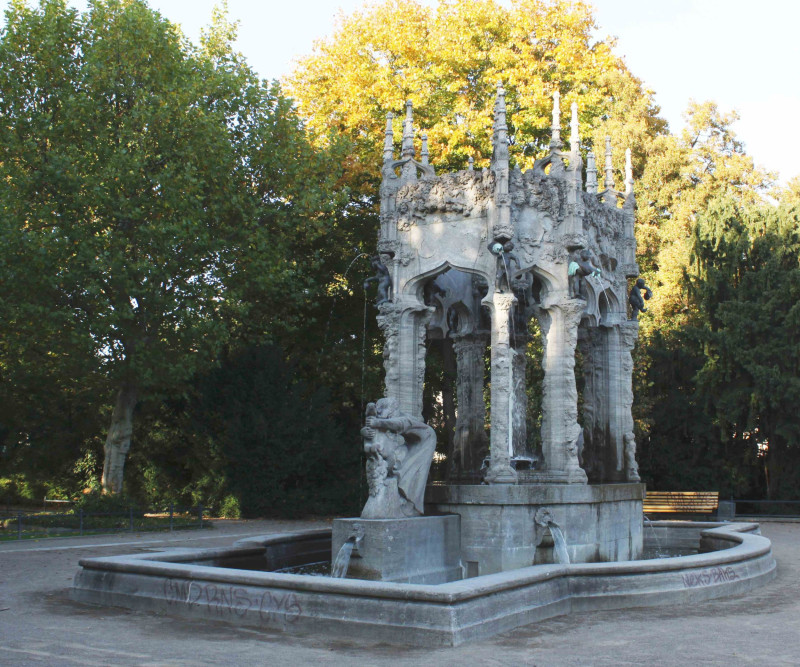
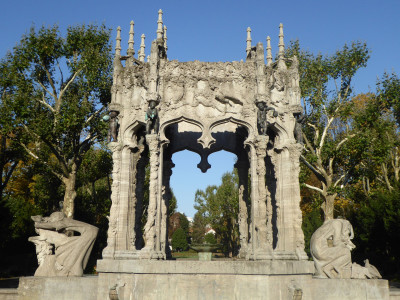
The Geyger Fountain forms the centerpiece of the historic Von-der-Schulenburg Park and is a significant example of Symbolist fountain architecture. The original fountain sculpture, „Deutscher Wald – Symbol des Waldesdomes” was designed between 1915 and 1918 by the Berlin sculptor Ernst Moritz Geyger. The town of Rixdorf (Neukölln from 1912) wanted to erect a monument to its internationally renowned son.
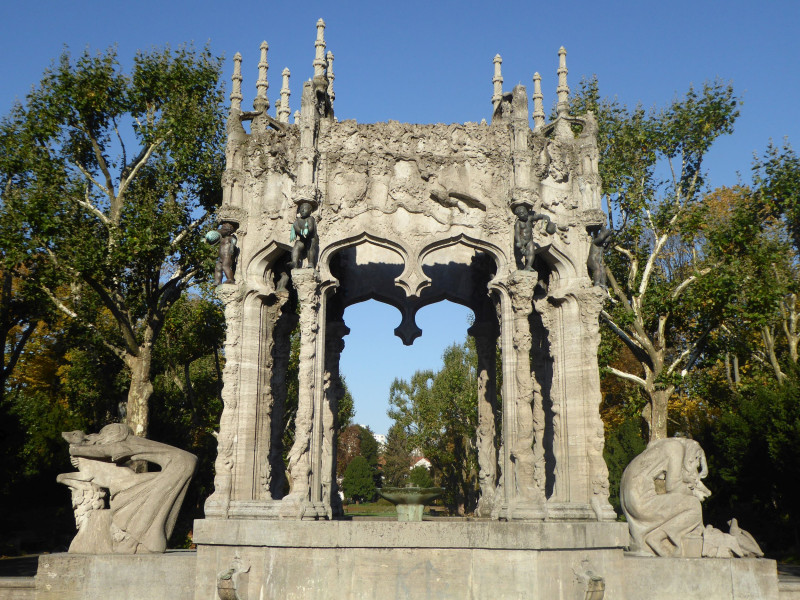
The fountain features a large basin, within which a tall, canopy-like structure is set atop a pedestal. The pillar or column structure depicts, in a symbolically stylized form, tree trunks overgrown with vegetation and populated by birds, frogs, and lizards. The curved wall panels between the pillars feature figurative relief scenes: herons with their prey, eagles and owls as symbols of day and night, as well as depictions of the moon, stars and sun.
Although the life-size plaster model was already completed in 1918, its installation was delayed by 17 years. When Spartacists took control of the Neukölln town hall in late November 1918 and proclaimed a Republic of Neukölln, installation was no longer an option. The model and the molded parts made of shell limestone were initially stored in a street cleaning depot. It was not until 1934 that the city administration decided to install it in Schulenburgpark. The dedication took place on August 11, 1935.
War Damage and Initial Restoration
The original features included two bronze sculptures, 16 water-spouting bronze putti, and a chalice-shaped fountain basin, all of which were melted down during World War II. The fountain itself was largely destroyed by bombs.
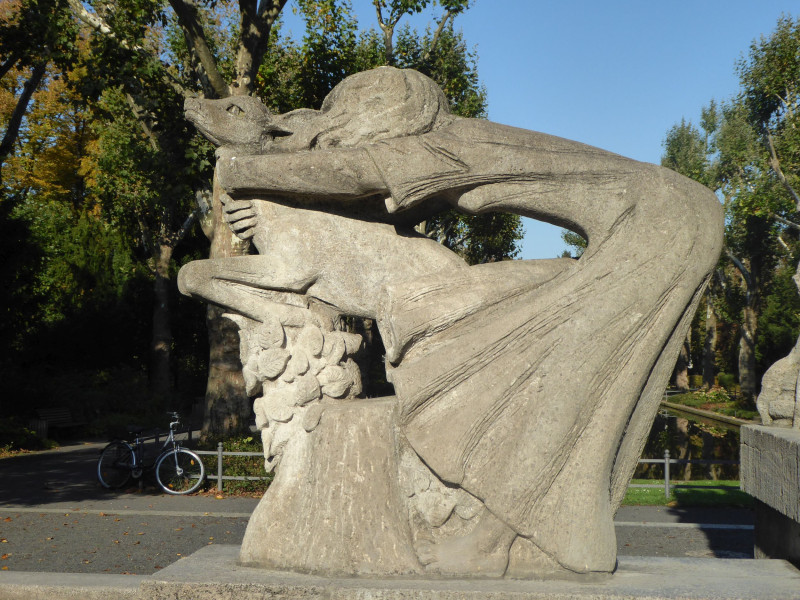
An initial restoration took place in the 1950s. In 1970, Katharina Szelinsky-Singer created two groups of limestone figures to replace the original bronze deer: “Brüderlein und Schwesterlein” and “Aschenbrödel”. The fountain was subsequently named the „Märchenbrunnen” (“Fairy Tale Fountain”) by the local population.
Renovation 2000/2001
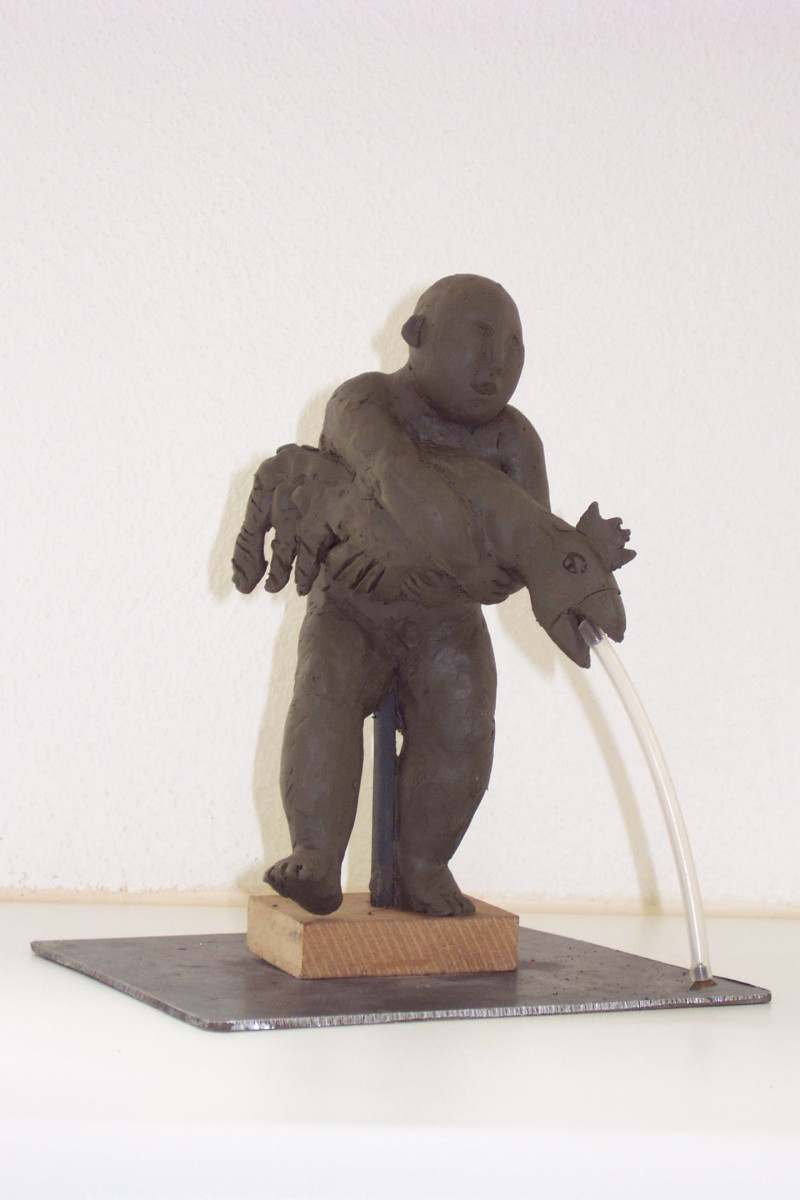
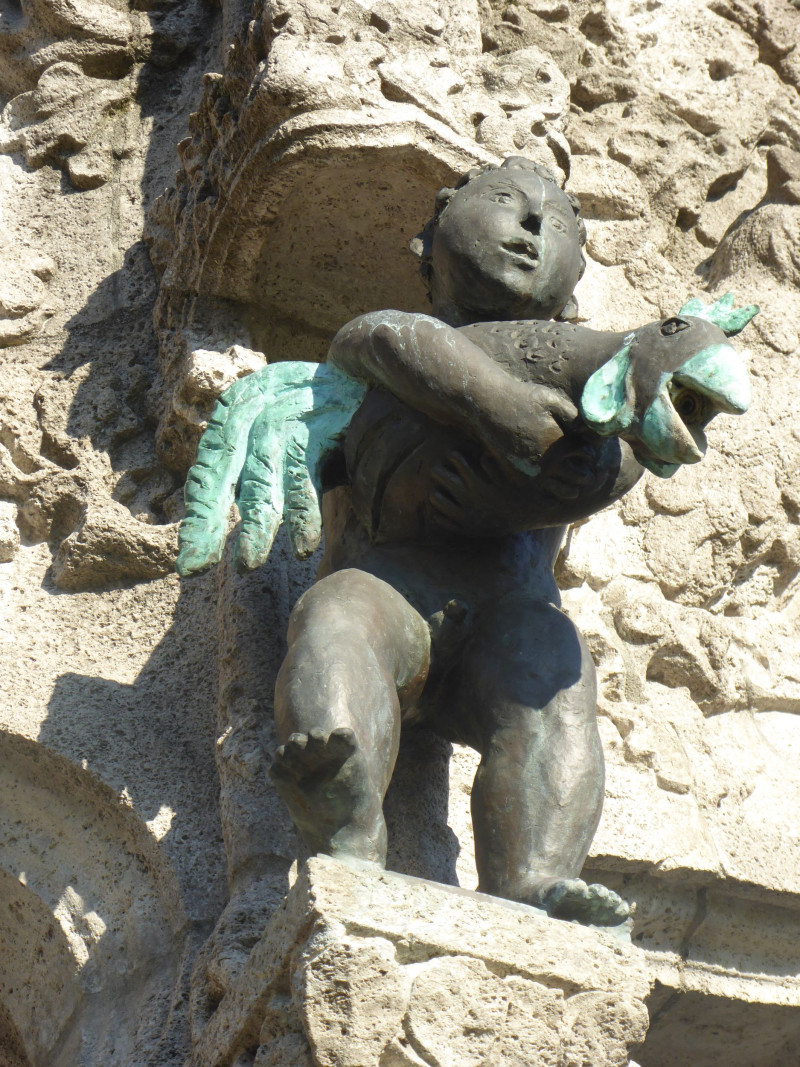
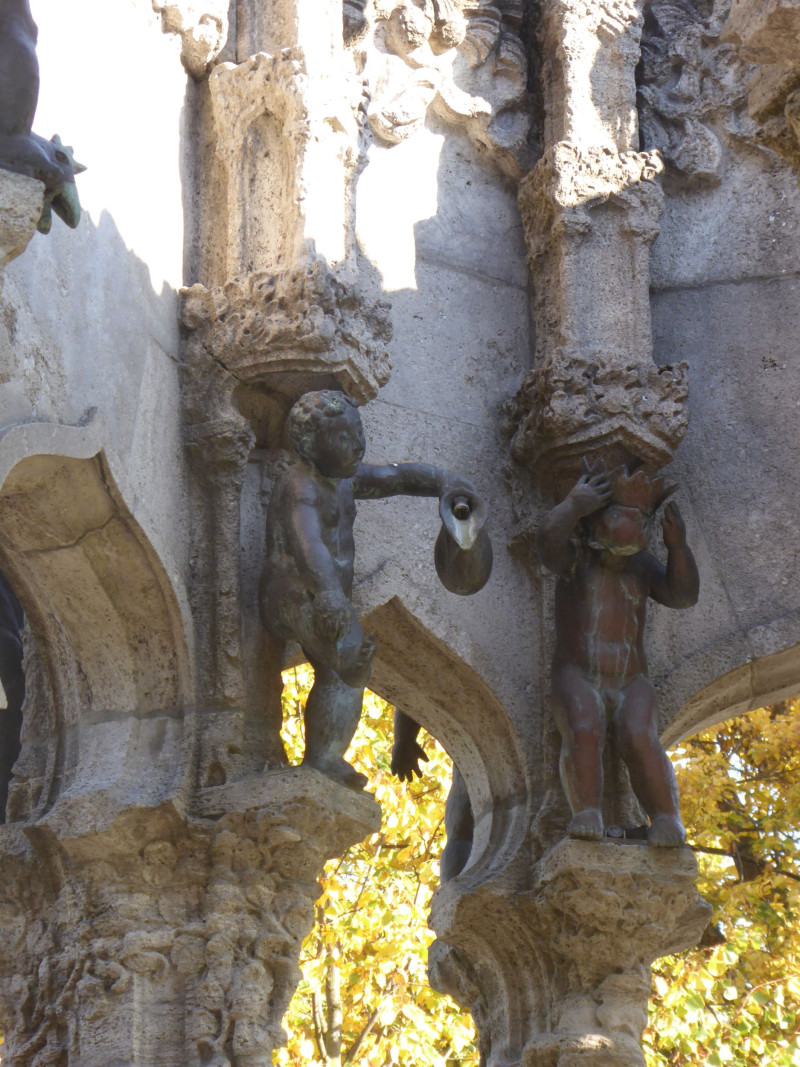
As part of the renovation in 2000/2001, 16 new bronze fountain figures were created by Anna Bogouchewskaja. Drawing inspiration from the original putti and the popular name “Fairy Tale Fountain,” the sculptor created human figures depicting humorous, ironic, or fairy-tale-like scenes. Four types of figures were each cast four times in bronze and are characterized by partially gilded or lightly patinated attributes—pineapple, chicken, fish, jug, crown—without appearing historicizing.
Data and Facts
- Location: Von-der-Schulenburg Park, Sonnenallee
- Creator/Date: Ernst Moritz Geyger (sculptor) – original fountain, 1915–1918 / Katharina Szelinsky-Singer (sculptor) – Figure groups “Brüderlein und Schwesterlein” and “Aschenbrödel”, 1970 / Anna Bogouchewskaia (sculptor) – 16 putto figures, 2001
- Installation: Original fountain: August 11, 1935
- Competition type: Closed competition (2000)
- Competition participants: Anna Bogouchewskaja, Jana Grzimek, Prof. Richard Hess, Gerald Matzner, Serge Petit, Paul Pfarr
- Renovation cost: approx. €100,000
- Listed as a historic monument: Yes