Nadia Kaabi-Linke: Meinstein
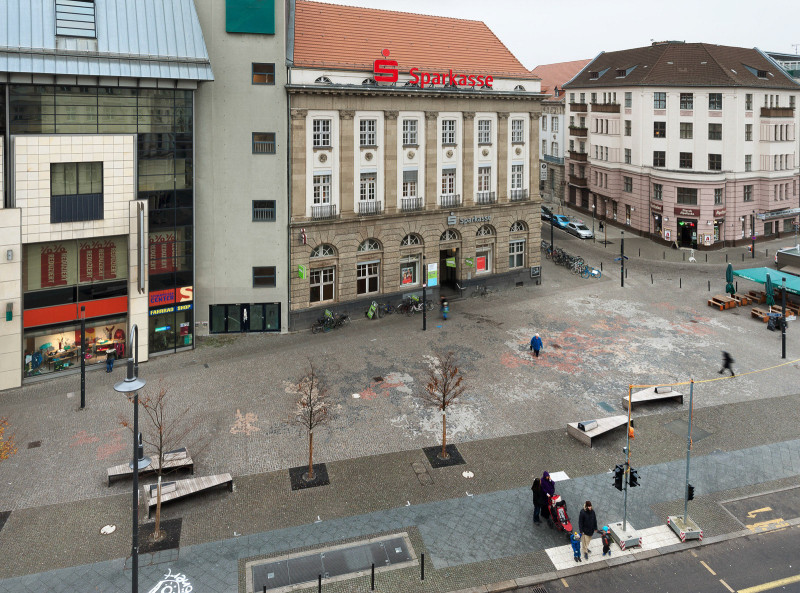
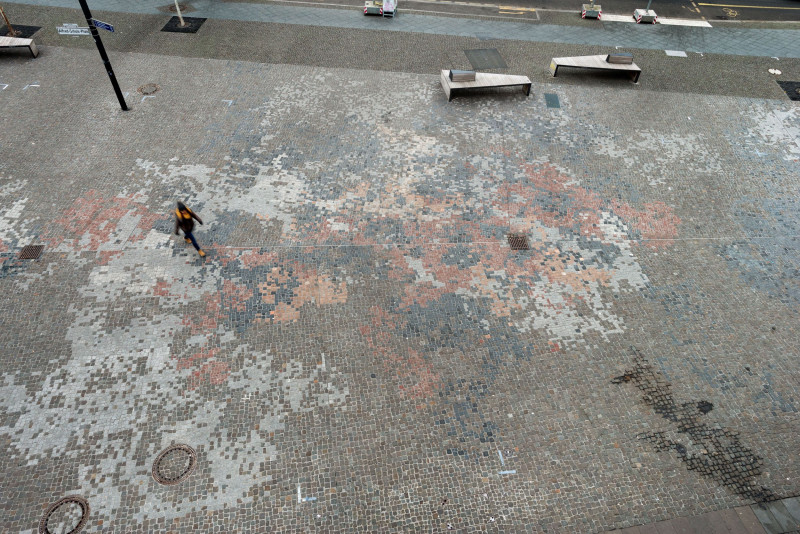
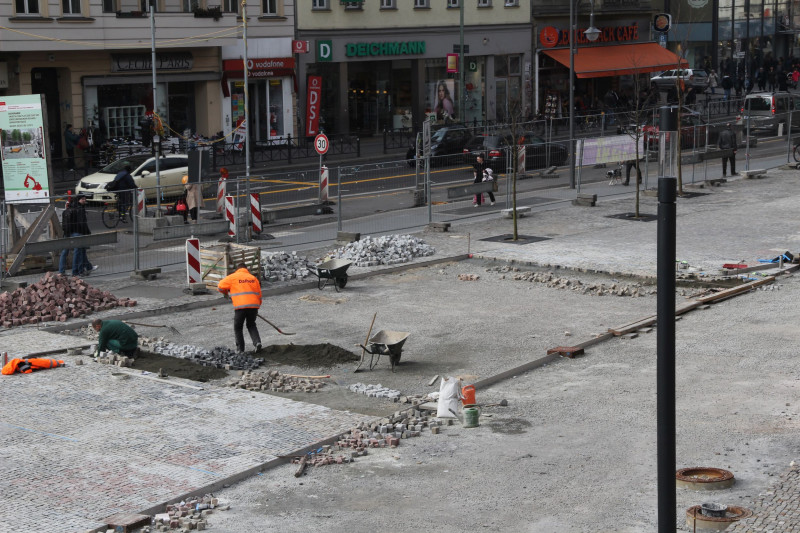
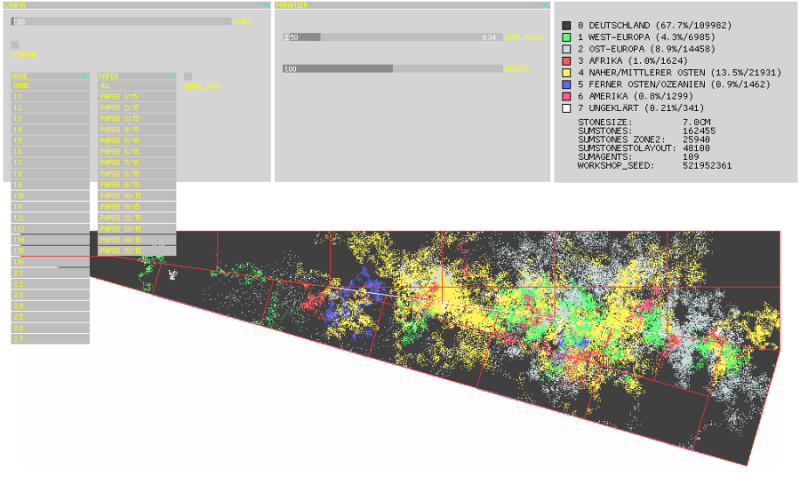
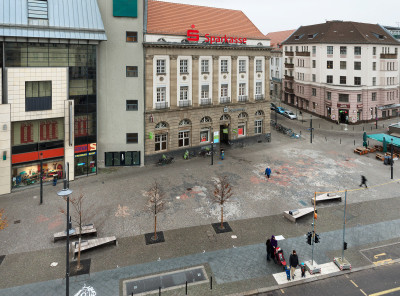
For the installation, colored stones were imported from the regions of origin of Neukölln’s residents and now form a mosaic on Alfred-Scholz-Platz. The number of stones corresponds roughly to the population of northern Neukölln. In this way, they symbolize the memories people have brought with them, their homeland, and migration.
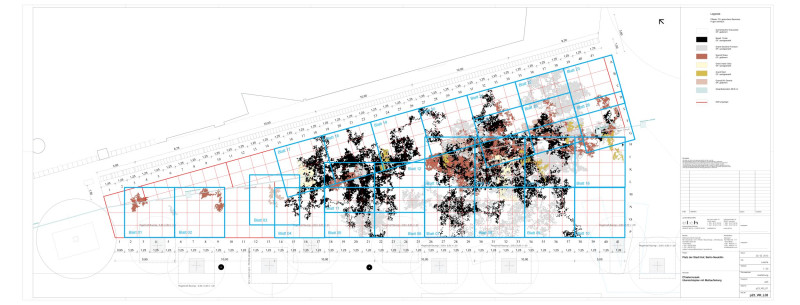
In ten workshops, artists Nadia Kaabi-Linke and Roos Versteeg explored community life in the neighborhood: How do people in Neukölln feel connected? What do they like about living there? Where would they prefer to live if they had the choice? The translation of these personal narratives into the abstract paving design was carried out using a computer program developed by media artist Ralf Baecker. The code transformed answers and drawings into numbers, values, and color codes. A computer simulation then generated a dynamic pattern based on the cohesion of different stones. Through their input, the participants influenced the movements of virtual agents within the program—determining whether mixtures or groupings would form, and whether larger or smaller steps would be taken.
The process became a metaphor for communal life: residents shape their environment without being able to fully control the process or the outcome. They built their own space without immediately realizing it.
Data and Facts
- Location: Alfred-Scholz-Platz – Competition as part of the [Aktion! Karl-Marx-Straße]
- Completion: 2014
- Competition type: restricted competition; the competition brief consisted of an open-space planning component and an artistic contribution
- Competition participants: bbzl with Thomas Hannibal, Christina Kautz with Stefan Mathey and Bruno Dorn, el:ch with Nadia Kaabi-Linke, feld72 architektur & urbane konzepte ZT GmbH with Ton Matton, Hahn von Hantelmann with Büro Huennerkopf, Hanke + Partner with Marek Jahke and Egidius Knops, Landschafts. Architektur Birgit Hammer with Henry Ribke and Roland Boden, Mettler Landscape Architecture with audio-architektur, Planorama Landscape Architecture with Sven Kalden, Rehwald Landscape Architects with Lucia Dellefant, ST raum a. Landscape Architecture GmbH with the artist group inges idee GbR.
- Project budget: €409,000